

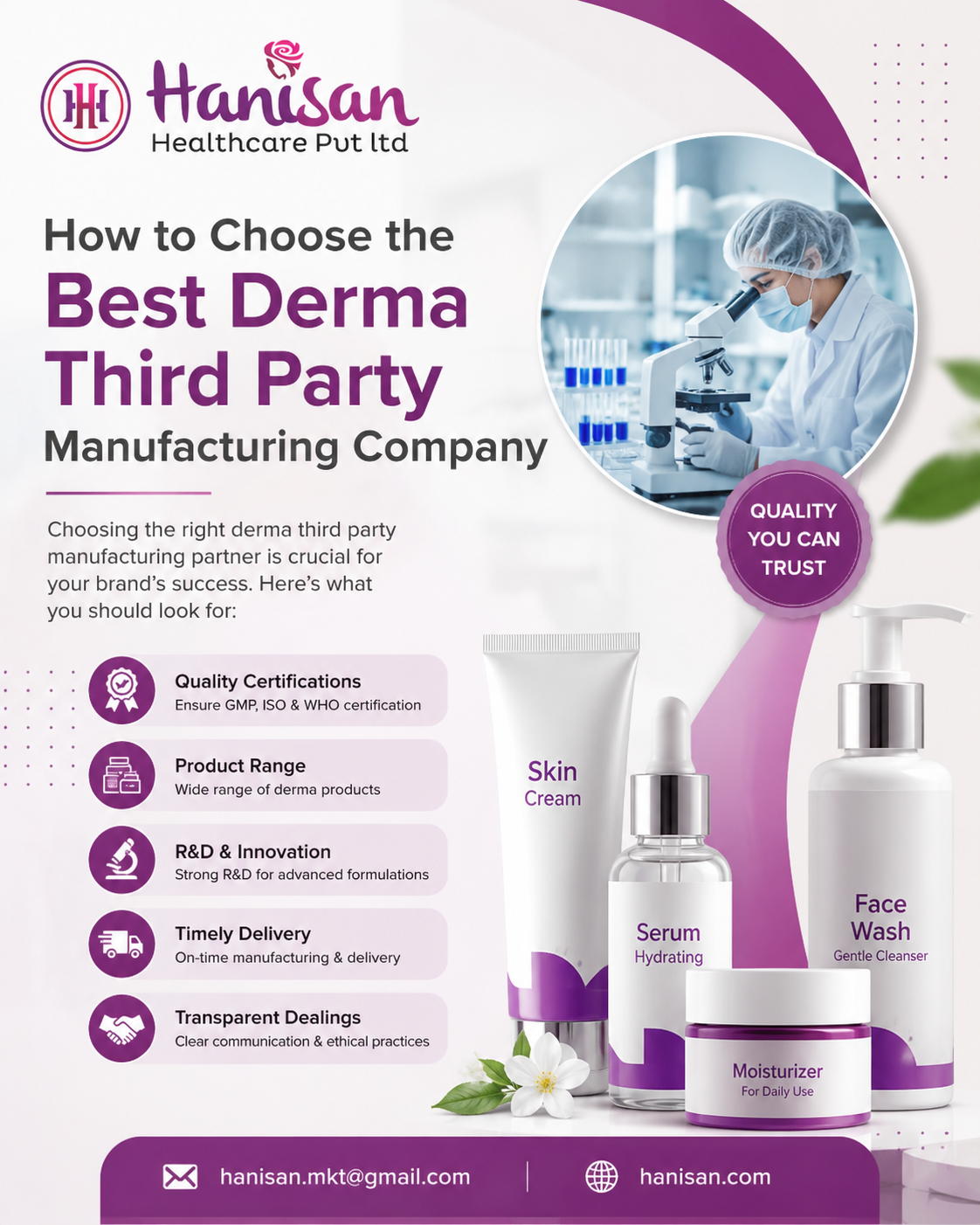
The Indian dermatology market continues to grow rapidly, driven by increasing awareness of skincare, rising demand for cosmetic dermatology products, and expanding healthcare access. As a result, many pharmaceutical companies, distributors, and entrepreneurs are entering the derma segment through third-party manufacturing.
However, the success of your business largely depends on selecting the right manufacturing partner. A reliable derma third-party manufacturing company ensures consistent product quality, regulatory compliance, timely deliveries, and long-term business growth.
In this 2026 guide, we’ll discuss the key factors you should consider before choosing a derma third-party manufacturing company in India.
Why Choosing the Right Manufacturing Partner Matters
Dermatology products require high-quality ingredients, precise formulations, and strict manufacturing standards. Whether you’re planning to launch a skincare brand or expand your PCD Pharma franchise portfolio, partnering with an experienced manufacturer helps you maintain product quality and customer trust.
A dependable manufacturer also reduces operational risks, allowing you to focus on marketing, distribution, and business development.
1. Verify Manufacturing Certifications
The first step is to ensure the manufacturer complies with industry regulations.
Look for certifications such as the following:
- WHO-GMP Certification
- ISO Certification
- GMP-compliant manufacturing facilities
- DCGI and state regulatory approvals where applicable
These certifications indicate that the company follows recognised quality management systems and pharmaceutical manufacturing practices.
2. Evaluate the Product Portfolio
An experienced derma manufacturing company should offer a comprehensive range of dermatology products to meet diverse market demands.
Popular categories include:
- Anti-fungal creams
- Anti-acne gels
- Moisturizers
- Sunscreens
- Skin whitening creams
- Anti-eczema formulations
- Lotions
- Ointments
- Face washes
- Medicated soaps
- Shampoos
A broad product range allows distributors and franchise partners to cater to different customer segments without changing manufacturing partners.
3. Assess Manufacturing Infrastructure
Modern manufacturing infrastructure directly affects product consistency and quality.
Before finalising a partnership, evaluate whether the company has:
- Advanced manufacturing equipment
- In-house quality testing laboratories
- Clean and hygienic production facilities
- Experienced production and quality assurance teams
- Adequate production capacity
Many manufacturers also offer facility visits or virtual tours to help clients understand their manufacturing processes.
4. Check Quality Control Standards
Quality should never be compromised in dermatology products because they are applied directly to the skin.
Ask about the company’s quality assurance process, including:
- Raw material testing
- In-process quality checks
- Finished product testing
- Batch consistency
- Stability testing
Reliable manufacturers maintain detailed quality documentation and follow strict standard operating procedures throughout production.
5. Look for Custom Manufacturing Services
Every pharmaceutical business has unique requirements.
The best third-party derma manufacturing companies often provide the following:
- Custom formulations
- Private labeling
- Customized packaging
- Product branding
- Artwork and label design support
- Flexible batch sizes
These services make it easier to establish your own brand in a competitive market.
6. Evaluate Delivery Performance
Timely delivery is essential for maintaining inventory and meeting customer demand.
Before signing an agreement, ask about:
- Average production timelines
- Dispatch schedules
- Packaging standards
- Logistics support
- Order tracking
Manufacturers with efficient supply chain management help minimise delays and improve business continuity.
7. Compare Pricing Without Compromising Quality
Competitive pricing is important, but selecting the lowest-cost manufacturer may lead to quality issues.
Instead, compare manufacturers based on:
- Product quality
- Manufacturing standards
- Packaging quality
- Customer support
- Long-term value
A slightly higher investment in a reliable manufacturer often results in better customer satisfaction and stronger market reputation.
8. Review Industry Experience and Reputation
Experience matters significantly in pharmaceutical manufacturing.
Research the company’s:
- Years of industry experience
- Client testimonials
- Business reputation
- Existing customer base
- Product quality record
A manufacturer with a proven track record is generally better equipped to handle regulatory requirements, product development, and changing market demands.
9. Customer Support and Documentation
Professional communication plays an important role throughout the manufacturing process.
Choose a company that provides:
- Dedicated account management
- Prompt responses
- Technical assistance
- Regulatory documentation
- Transparent pricing
- After-sales support
Good customer service builds long-term business relationships and simplifies future product launches.
Why Businesses Prefer Experienced Derma Manufacturers
Experienced third-party manufacturers understand market trends, regulatory expectations, and customer requirements. They can provide guidance on product selection, packaging improvements, and manufacturing best practices while ensuring consistent product quality.
For distributors, pharmacy owners, healthcare professionals, and entrepreneurs entering the dermatology segment, choosing an experienced manufacturing partner reduces operational challenges and creates a solid foundation for sustainable business growth.
Why Choose Hanisan Healthcare?
Hanisan Healthcare is committed to delivering high-quality pharmaceutical manufacturing solutions with a strong focus on quality, compliance, and customer satisfaction. The company offers a diverse range of dermatology formulations manufactured under stringent quality standards using modern production facilities.
Whether you’re looking for private labelling, third-party manufacturing, or expanding your PCD Pharma business, Hanisan Healthcare aims to provide dependable manufacturing support, timely delivery, and professional service to help your business grow.
To learn more about the company’s manufacturing capabilities and product portfolio, visit https://hanisan.com.
Conclusion
Selecting the best derma third-party manufacturing company in India requires careful evaluation of certifications, manufacturing infrastructure, product quality, regulatory compliance, pricing, delivery performance, and customer support.
Rather than focusing solely on cost, prioritise manufacturers that consistently deliver quality products, maintain transparent business practices, and support your long-term business objectives. A trusted manufacturing partner can strengthen your brand reputation, improve customer satisfaction, and position your business for sustained success in India’s growing dermatology pharmaceutical market.