

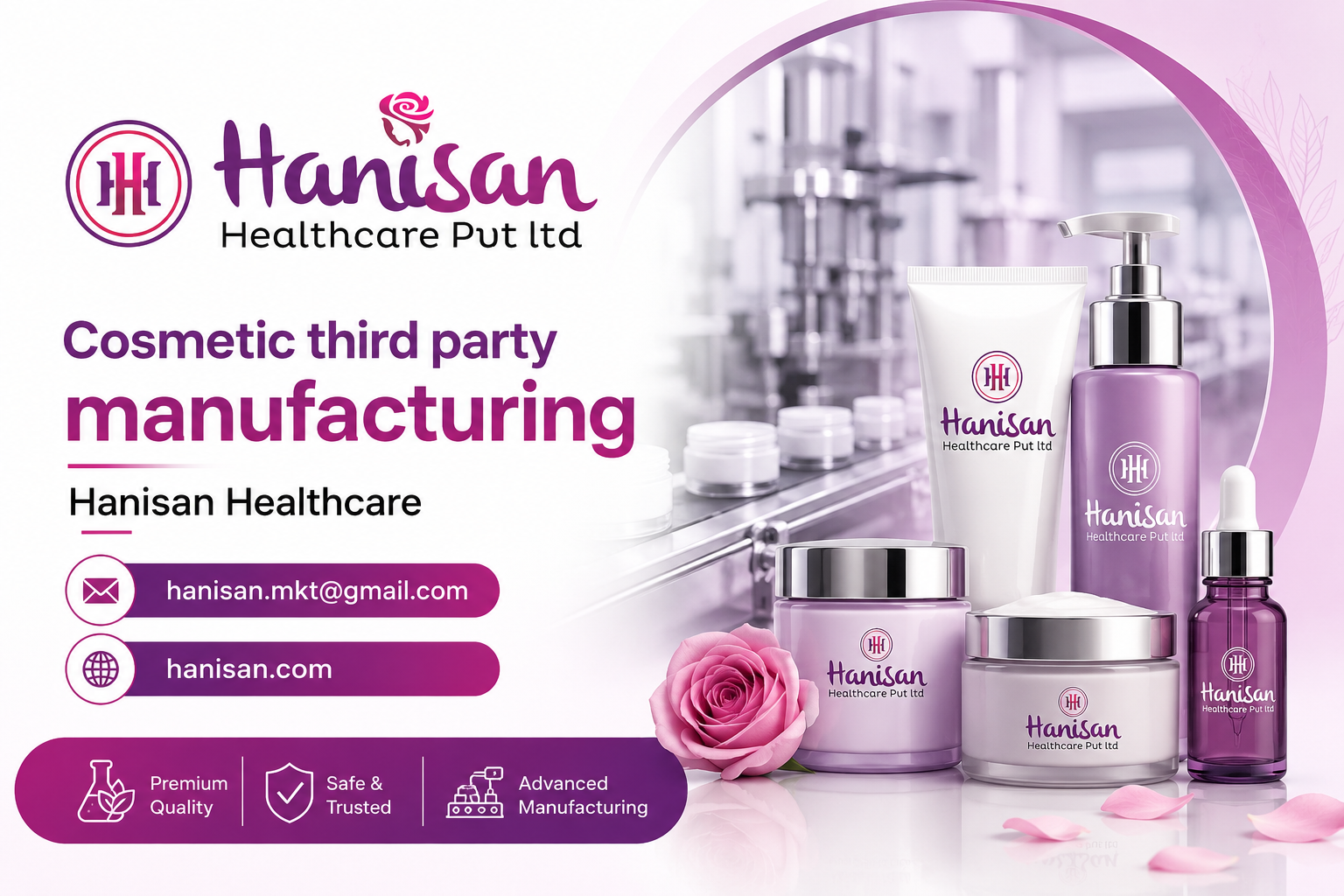
The beauty and personal care industry is growing faster than ever. Consumers today are looking for high-quality skincare, haircare, and cosmetic products that deliver real results. At the same time, entrepreneurs and businesses are searching for cost-effective ways to enter this competitive market without investing heavily in manufacturing facilities.
This is where cosmetic third-party manufacturing becomes a game-changer.
Whether you’re launching a new cosmetic brand or expanding an existing product line, third-party manufacturing allows you to focus on branding, marketing, and sales while experienced manufacturers handle production. Companies like Hanisan Healthcare have become trusted partners for businesses seeking reliable cosmetic manufacturing solutions in India.
In this guide, we’ll explore everything you need to know about cosmetic third-party manufacturing, its benefits, how it works, and why it has become the preferred business model for many beauty brands.
What is Cosmetic Third-Party Manufacturing?
Cosmetic third-party manufacturing is a business arrangement where a company outsources the production of cosmetic products to a specialised manufacturer. The manufacturer produces products according to the client’s requirements, while the client sells them under its own brand name.
Simply put, you own the brand, and the manufacturer takes care of product development, production, packaging, quality control, and compliance.
This model is widely used in the cosmetics industry because it reduces operational complexities and significantly lowers startup costs.
Examples of Products Manufactured Through Third-Party Manufacturing
A cosmetic third-party manufacturer can produce a wide range of products, including the following:
- Face creams
- Moisturizers
- Sunscreens
- Face serums
- Face washes
- Body lotions
- Hair oils
- Shampoos
- Conditioners
- Beard care products
- Lip balms
- Herbal cosmetics
- Organic skincare products
Many successful cosmetic brands began by partnering with third-party manufacturers before establishing a larger market presence.
Why Cosmetic Third-Party Manufacturing is Growing Rapidly
The demand for beauty and personal care products continues to rise across India and international markets. Consumers are becoming more conscious about skincare, grooming, and self-care routines.
As a result, new cosmetic brands are emerging every year.
However, setting up a manufacturing facility requires:
- High capital investment
- Technical expertise
- Regulatory approvals
- Manufacturing equipment
- Skilled workforce
- Quality testing infrastructure
For many businesses, these requirements can be overwhelming.
Third-party manufacturing solves these challenges by providing a ready-to-use production infrastructure.
Key Benefits of Cosmetic Third-Party Manufacturing
1. Lower Investment Requirements
Starting a cosmetic manufacturing plant requires significant financial resources. You need machinery, production units, laboratory facilities, packaging equipment, and regulatory certifications.
With cosmetic third-party manufacturing, you avoid these costs and pay only for production services.
This makes it easier for startups and small businesses to enter the market.
2. Faster Product Launch
Speed matters in the cosmetics industry.
Trends change quickly, and consumers are constantly looking for innovative products. A reliable manufacturing partner can help you launch products much faster than building your own facility.
This allows brands to capitalise on emerging market opportunities.
3. Access to Industry Expertise
Established manufacturers possess years of experience in cosmetic formulation and production.
They understand:
- Ingredient compatibility
- Product stability
- Packaging requirements
- Regulatory compliance
- Quality control procedures
Their expertise helps ensure consistent product quality and customer satisfaction.
4. Focus on Brand Growth
Instead of managing production operations, businesses can focus on:
- Marketing
- Branding
- Customer acquisition
- Distribution
- Product promotion
This often leads to faster business growth and better market positioning.
5. High-Quality Manufacturing Standards
Professional cosmetic manufacturers follow strict quality standards.
Many facilities are equipped with:
- GMP-certified production units
- Advanced testing laboratories
- Modern machinery
- Quality assurance systems
These standards help maintain product consistency and safety.
How Cosmetic Third-Party Manufacturing Works
Understanding the process can help businesses choose the right manufacturing partner.
Step 1: Product Selection
The client decides which products they want to manufacture.
For example:
- Anti-aging cream
- Vitamin C serum
- Herbal shampoo
- Sunscreen lotion
Step 2: Product Formulation
The manufacturer develops or customises formulations according to brand requirements.
This stage may include:
- Ingredient selection
- Product testing
- Sample development
Step 3: Packaging Design
Packaging plays a major role in cosmetic branding.
The client selects:
- Bottles
- Tubes
- Labels
- Boxes
- Product branding elements
Step 4: Manufacturing
Once formulations and packaging are approved, large-scale production begins.
The manufacturer follows standardised production procedures to ensure consistency.
Step 5: Quality Testing
Products undergo rigorous quality checks before dispatch.
Testing may include:
- Stability testing
- Microbiological testing
- Safety assessments
- Packaging inspections
Step 6: Delivery
Finished products are delivered to the client, ready for market distribution.
Why Quality Matters in Cosmetic Manufacturing
Consumers apply cosmetic products directly to their skin and hair.
Poor-quality products can result in:
- Skin irritation
- Allergic reactions
- Customer complaints
- Brand reputation damage
This is why selecting an experienced manufacturing partner is crucial.
A reputable manufacturer prioritises the following:
- Premium ingredients
- Safe formulations
- Product efficacy
- Regulatory compliance
The quality of your products directly impacts customer trust and repeat purchases.
Choosing the Right Cosmetic Third-Party Manufacturing Company
Not all manufacturers offer the same level of expertise and reliability.
Before selecting a manufacturing partner, consider the following factors.
Manufacturing Experience
Look for companies with proven experience in cosmetic production.
Experienced manufacturers understand industry standards and evolving market demands.
Certifications
Ensure the manufacturer follows recognised quality standards, such as:
- GMP Certification
- ISO Certification
- Regulatory compliance requirements
These certifications indicate a commitment to quality and safety.
Product Range
Choose a manufacturer capable of producing a wide range of cosmetic categories.
A broader product portfolio allows future expansion without changing partners.
Customization Capabilities
Every brand has unique requirements.
The manufacturer should offer:
- Custom formulations
- Private labeling
- Packaging customization
Production Capacity
Make sure the company can meet both current and future production demands.
Scalability is essential for growing brands.
Why Businesses Prefer Hanisan Healthcare
When it comes to cosmetic third-party manufacturing in India, Hanisan Healthcare has established itself as a trusted manufacturing partner.
The company focuses on delivering high-quality cosmetic solutions that meet modern consumer expectations.
Businesses choose Hanisan Healthcare because of the following:
Advanced Manufacturing Facilities
Modern production infrastructure helps ensure efficiency, consistency, and product quality.
Wide Product Portfolio
The company offers manufacturing solutions across multiple cosmetic and personal care categories.
Quality-Driven Approach
Every stage of production undergoes strict quality monitoring to maintain product safety and effectiveness.
Custom Manufacturing Solutions
Hanisan Healthcare supports businesses with tailored manufacturing solutions designed around specific brand goals.
Regulatory Compliance
The company follows industry regulations and manufacturing standards that help brands build consumer confidence.
Current Trends Driving Cosmetic Third-Party Manufacturing
The beauty industry is constantly evolving.
Several trends are increasing the demand for third-party cosmetic manufacturing services.
Natural and Herbal Cosmetics
Consumers increasingly prefer products made with natural ingredients.
Popular ingredients include:
- Aloe vera
- Neem
- Turmeric
- Green tea
- Tea tree oil
Sustainable Packaging
Eco-friendly packaging is becoming a major purchasing factor.
Brands are seeking manufacturers that support sustainable packaging solutions.
Personalized Beauty Products
Consumers want products designed for their specific skin and hair concerns.
Manufacturers are responding with customised formulations.
Clean Beauty Movement
People are paying more attention to ingredient transparency.
Products free from harsh chemicals are experiencing strong demand.
Challenges in Cosmetic Manufacturing and How Third-Party Partners Help
Managing cosmetic production independently presents several challenges.
Regulatory Compliance
Cosmetic regulations can be complex and time-consuming.
Experienced manufacturers stay updated with industry requirements and help ensure compliance.
Product Consistency
Maintaining uniform quality across production batches requires sophisticated systems.
Professional manufacturers have established quality control protocols.
Supply Chain Management
Sourcing ingredients, packaging materials, and production resources can be difficult.
Third-party manufacturers often have established supplier networks that improve efficiency.
Is cosmetic third-party manufacturing right for your business?
Third-party manufacturing is ideal for:
- Cosmetic startups
- Beauty influencers launching brands
- Retailers expanding private-label products
- E-commerce beauty businesses
- Established cosmetic brands seeking production support
If your goal is to build a strong cosmetic brand without investing heavily in manufacturing infrastructure, this model offers a practical and scalable solution.
The Future of Cosmetic Third-Party Manufacturing
The future looks promising for cosmetic third-party manufacturing.
Growing consumer demand, increasing product innovation, and the rise of digital beauty brands continue to create opportunities in the industry.
Manufacturers that focus on:
- Innovation
- Quality assurance
- Sustainable practices
- Advanced formulations
will remain at the forefront of market growth.
Businesses that partner with experienced manufacturers can launch products faster, maintain quality standards, and scale efficiently.
Conclusion
The cosmetics industry offers tremendous opportunities for entrepreneurs and established businesses alike. However, manufacturing products independently can be expensive and operationally demanding.
Cosmetic third-party manufacturing provides a practical solution by allowing brands to access professional production facilities, technical expertise, and quality assurance systems without major capital investment.
By partnering with a trusted manufacturer such as Hanisan Healthcare, businesses can focus on building strong brands while ensuring their products meet industry standards and consumer expectations.
As demand for skincare, haircare, herbal cosmetics, and personal care products continues to grow, third-party manufacturing remains one of the smartest strategies for achieving sustainable success in the beauty industry.
Frequently Asked Questions (FAQs)
What is cosmetic third-party manufacturing?
Cosmetic third-party manufacturing is a business model where a manufacturer produces cosmetic products for another company, which then sells them under its own brand name.
What are the advantages of cosmetic third-party manufacturing?
Major benefits include lower investment costs, faster market entry, access to expert manufacturing facilities, quality assurance, and the ability to focus on branding and sales.
Can I create my own cosmetic brand through third-party manufacturing?
Yes. Many businesses launch their own skincare, haircare, and cosmetic brands using third-party manufacturing services.
How do I choose a cosmetic manufacturing company?
Look for experience, certifications, product range, customisation options, production capacity, and a strong reputation in the industry.
Why is Hanisan Healthcare a preferred cosmetic manufacturing partner?
Hanisan Healthcare offers advanced manufacturing capabilities, quality-focused production processes, customisation options, and comprehensive cosmetic manufacturing solutions for growing brands.
Is cosmetic third-party manufacturing suitable for startups?
Absolutely. It allows startups to enter the cosmetics market without investing heavily in manufacturing infrastructure, making it a cost-effective growth strategy.